Desoldering tools, the focused range for clean component removal at ZedLabz.
Browse desoldering by tool type
- Soldering tools, irons, tips, solder, flux
- Tools and consumables, broader workstation kit
- ESD protection, for sensitive board work
- PCB trace repair, for fixing damage during desolder
The other half of soldering, getting components off boards cleanly without lifting pads or scorching surrounding parts. We stock manual desoldering pumps (the classic spring-loaded "solder sucker"), desoldering braid (copper wick that absorbs molten solder), and hot air stations for SMD rework. Suitable for retro-console capacitor recap work, replacing through-hole connectors, and modern board-level repair.
Quick picks by board type
- Easy entry point: a desoldering pump (spring-loaded solder sucker) plus a roll of desoldering braid, handles through-hole component removal on most boards.
- The crowd favorite: a temperature-controlled iron alongside good desoldering braid, for clean recap work on retro-console boards (PS1, N64, Sega Saturn).
- The pro choice: a hot air rework station for SMD components, pulls surface-mount caps, ICs and connectors off boards in one motion.
How desoldering tools work
- Desoldering pump: heat the joint until solder melts, then push the pump trigger to suck molten solder off the pad. Simple, reliable for through-hole work.
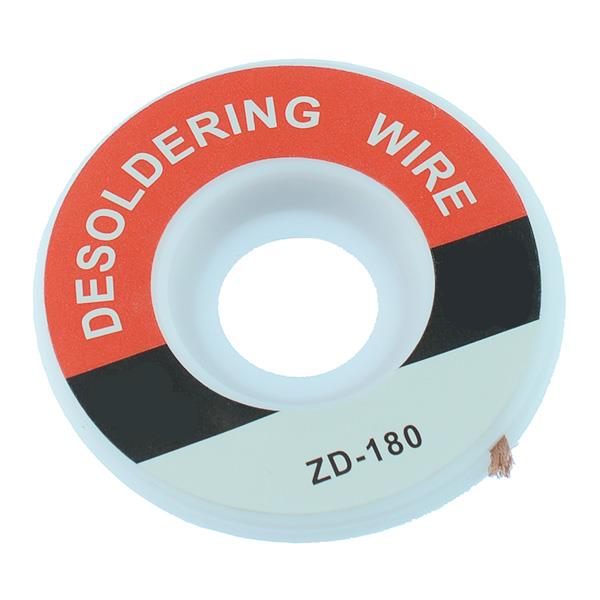
- Desoldering braid (solder wick): hold a length of copper braid against the joint, press a hot iron tip onto the braid, and the solder wicks up into the braid via capillary action. Good for cleaning pads after the bulk is removed.
- Hot air station: directs hot, controlled airflow at SMD parts to melt all their joints simultaneously. Once molten, lift the part with tweezers. Skill curve, but typically the practical option for most SMD work.
- Powered desoldering iron: combines a soldering iron tip with vacuum pickup. Pricier, but the cleanest result for bulk through-hole desolder.
Shipped worldwide with tracking on every order. See our returns policy for support.
Related collections
- Soldering tools
- Fuses, capacitors and wire, for the parts you'll desolder and replace
- PCB trace repair
- Tools and consumables
Desoldering. FAQs
Pump or wick, which is better for desoldering?
Both have a place. Pumps are quicker for removing the bulk of solder from a joint. Wick is better for cleaning the residual solder off pads after the pump pass, and for desoldering very small or close-spaced joints where a pump nozzle won't fit. Most modders use both, pump first, wick to finish.
Why do my desolders keep lifting the pads?
Pad lift typically comes from too much heat applied for too long, or pulling the component leg before the solder is fully molten. Add fresh solder to the old joint first (counter-intuitive but it improves heat transfer and gets the joint moving faster), use plenty of flux, keep the iron tip clean, and don't pull on legs that haven't released. On older boards (PS1, N64, vintage computers) pad adhesion is weaker, go gentler.
Do I need a hot air station for SMD work?
For pulling SMD chips, connectors and small parts cleanly, yes, hot air is the standard tool. SMD passives (small resistors, capacitors) can be done with a regular iron and a "drag-solder" technique, but anything bigger than 1206 size or with multiple pins benefits from hot air. A basic 858D-style station is the common entry point.
Why do hot air stations need controlled airflow?
Too much airflow blows small components off the board before they can be lifted with tweezers. Too little airflow takes too long to melt the joints, risking heat damage to surrounding parts. Most SMD desoldering uses moderate airflow with the temperature set around 350–400°C, adjusted by feel and by the component you're working on.